
Audio Score · July 2026
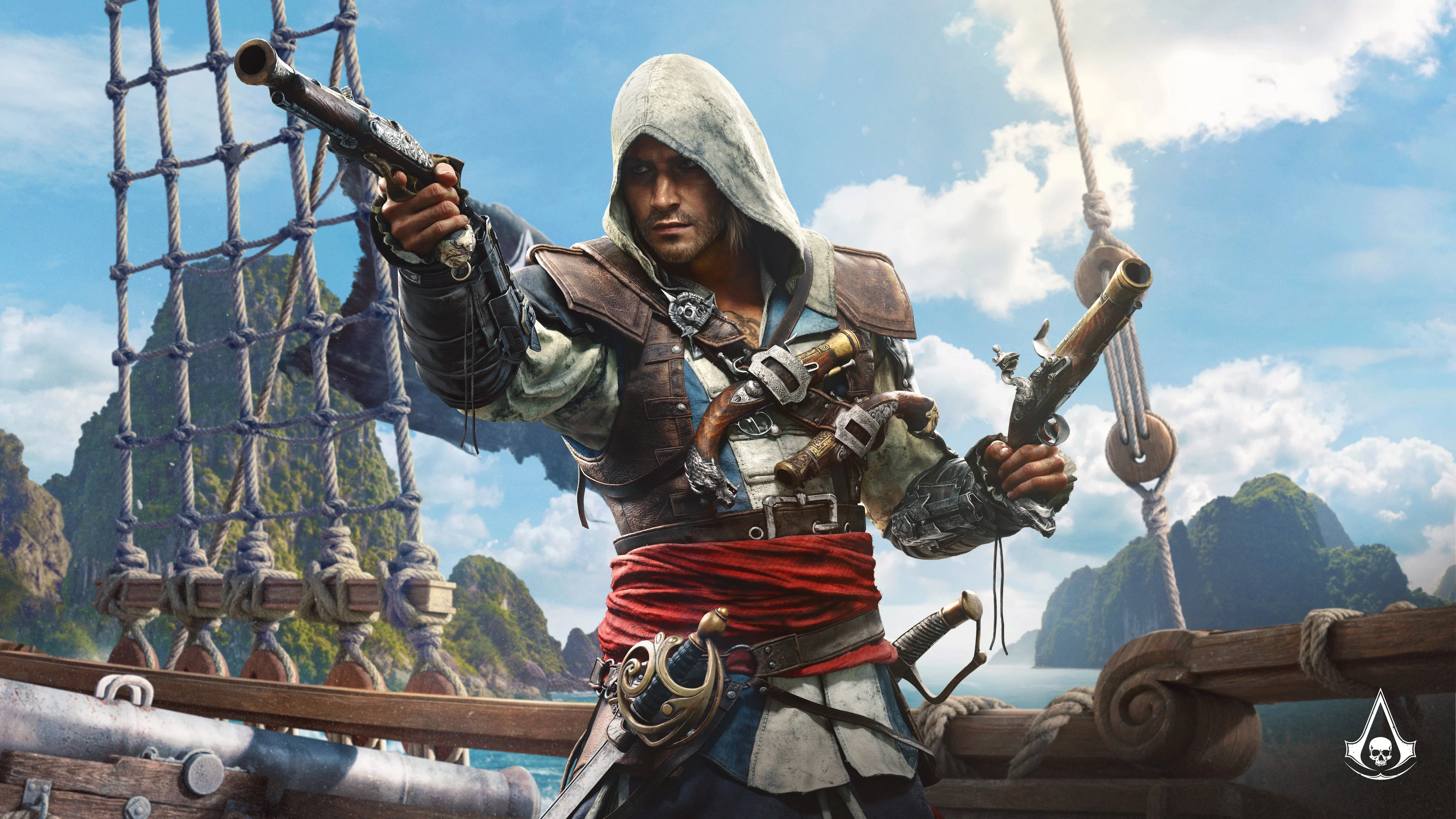
In 2013, Brian Tyler’s score gave Assassin’s Creed IV: Black Flag its soul. When that iconic track “The High Seas” swells, you can practically feel the Caribbean salt spray hitting your face, the sails tightening in the wind, the entire ocean bending under your helm.
Thirteen years later, Assassin’s Creed Black Flag Resynced doesn’t just bring Edward Kenway’s legend back in 4K — it delivers a soundtrack where old and new intertwine: Brian Tyler’s 34 classic tracks fully preserved, joined by 22 brand-new compositions from Stephen Lukach, plus Woodkid’s reimagined sea shanty. This isn’t a simple remaster; it’s a bold auditory reconstruction.
I. Brian Tyler’s Classics: Why 2013’s Sound Still Resonates
To understand the value of the Resynced soundtrack, we have to go back to 2013.
Before taking on Black Flag’s score, Brian Tyler was already one of Hollywood’s busiest composers — behind the Fast & Furious franchise, Iron Man 3, and Thor: The Dark World. But Black Flag gave him a completely different challenge: write a “pirate film”-caliber score that also accommodates the nonlinear demands of an open world.
His solution was a dual-track approach:
| Creative Axis | Musical Character | Representative Track | In-Game Context |
|---|---|---|---|
| Epic Orchestral | Large orchestra + choir, Hollywood film-grade scoring | ”The High Seas,” “Assassin’s Creed IV Main Theme” | Naval combat, story climaxes, landing at major cities |
| Folk Textures | Acoustic guitar, hurdy-gurdy, accordion, Irish whistle | ”Fare Thee Well,” “The Buccaneers,” “On the Horizon” | Exploration, sailing, island landings, tavern scenes |
Tyler’s smartest move was finding balance between epic orchestral and folk textures. “The High Seas” uses string sections to paint the ocean’s vastness, brass instruments to punctuate adventure’s thrill, and then in the chorus, an Irish whistle pulls out a simple, heart-stirring melody — a thread connecting “Hollywood epic” to “a sea shanty hummed by sailors in a tavern.”
And “Assassin’s Creed IV Main Theme” remains one of the most recognizable motif in the entire series. Tyler preserved the series’ signature “assassin’s aura” — stealthy, mysterious, with Middle Eastern modal inflections — but infused it with Caribbean sunlight and salt. It’s not Ezio’s family’s tragic aria; it’s standing at the bow, gazing at the horizon with exhilaration.
II. Stephen Lukach’s New Chapter: What 22 New Tracks Rebuild
The most delightful surprise of the Resynced edition isn’t the visual upgrade — it’s that Ubisoft chose not to “settle for a remaster.” They brought in Stephen Lukach (contributor to Assassin’s Creed Odyssey and Immortals Fenyx Rising) to compose entirely new tracks, rather than merely re-encoding old files.
These 22 new pieces fall into three categories:
① Character Themes — Injecting Emotional Depth into New Narratives
The Resynced edition adds new story quests, and the segments involving Stede Bonnet received brand-new music. Lukach’s “Stede’s Elegy” opens with a classical guitar solo — warm in tone but with delicate vibrato — precisely capturing the contradiction of this “gentleman pirate.” Strings gradually seep in during the latter half, as if foreshadowing his inability to escape this brutal world’s fate.
“Watchfires (Stede’s Dirge)” takes the opposite approach: double bass and low brass lay down a somber foundation, while a flute wanders alone in the upper register, like a lonely beacon fire on the night shore. Together, these two pieces form a complete musical arc for the character — personally, I consider this the entire soundtrack’s biggest highlight.
Lukach also composed “Mary Farewell,” inspired by Mary Read and Anne Bonny, weaving accordion and female vocals into a restrained yet poignant tapestry.
② Combat & Tension — More Nuanced Dynamic Layers
“Smoke and Plunder” is a standard combat cue, but Lukach boldly incorporates electronic rhythmic elements — deep, heavy synthesizer hits interlocking with orchestral percussion, creating a distinctly modern feel. This is uncommon in Assassin’s Creed scores, yet it fits perfectly alongside Resynced’s upgraded combat system.
“The Big One” sets a new benchmark for naval combat tracks. Unlike Brian Tyler’s melody-centric “The High Seas,” Lukach opts for rhythmic drive — dense timpani and cymbal strikes simulate the rhythm of cannon fire, with French horns punching out short motifs, like a captain barking orders through the thunder of battle.
③ Environmental Storytelling — Making the Caribbean Feel Unknown Again
What I appreciate most are Lukach’s tracks that fill “exploration time.”
“Future Past” opens with a solo piano, minimal and melancholic — it serves no story scene; it simply accompanies you as you sail through unknown waters at sunset. “A Fairy Tale” goes further, almost like a lullaby, using harp and woodwinds to paint the Caribbean night’s tenderness. These tracks prove Lukach understands a fundamental truth: open-world scoring doesn’t need every piece to be bombastic — sometimes, quiet is harder to write than thunder.
| Track Category | Original (Brian Tyler, 2013) | Resynced Addition (Stephen Lukach, 2026) |
|---|---|---|
| Main Theme | ”Assassin’s Creed IV Main Theme” — orchestral-led, classic melody | No new main theme (original preserved) |
| Naval Combat | ”The High Seas” — melody-first, epic feel | ”The Big One” — rhythm-driven, modern feel |
| Character Themes | Few independent character pieces | ”Stede’s Elegy,” “Mary Farewell,” “That Bastard Maynard” |
| Environmental Exploration | ”On the Horizon,” “Fare Thee Well" | "Future Past,” “A Fairy Tale,” “Strange Land” |
| Tragic/Farewell | ”Last Goodbyes" | "Watchfires (Stede’s Dirge),” “Hope and Danger” |
III. Woodkid and “Leave Her Johnny”: A 900M-Stream Phenomenon’s 2026 Variation
Resynced has another unmissable musical event: Woodkid’s reimagining of “Leave Her Johnny.”
This wasn’t a random choice. The original “Leave Her Johnny” (performed by Michel Schrey, Nils Brown, and Sean Dagher) has amassed over 900 million streams over the past thirteen years — one of the highest-streamed songs in gaming history. What began as an in-game crew shanty became a cultural phenomenon across TikTok, YouTube, and Spotify.
Woodkid (the French director and musician known for “Iron” and “Run Boy Run,” who also scored the iconic 2011 Assassin’s Creed: Revelations E3 trailer) took an unexpected path: he didn’t faithfully reproduce the shanty’s original form — he turned it into electronic folk.
The new “Leave Her Johnny (Woodkid Resynced)” opens with a deep, synthesizer drone, replacing the original accordion intro. Woodkid’s voice enters in a half-sung, half-spoken cadence, like a drunkard’s late-night monologue. In the chorus, the choir’s voice drifts in from afar — not the cabin’s harmonious singing, but like ghostly calls floating across the sea surface.
This arrangement won’t be for everyone — its rhythm shifts from the original work-song tempo into a slower 4/4 slow burn. But its significance transcends “whether it sounds good.” It embodies an attitude: Resynced isn’t about cryogenically preserving 2013’s memories — it’s about letting those memories speak again in 2026’s sonic context.
IV. The Technical Side of the Audio Upgrade
Beyond compositional updates, Resynced delivers substantial technical audio enhancements:
-
Atmos Mixing — The game supports Dolby Atmos, with orchestral spatial positioning far more precise: when you stand at the helm, violins strike from the left during naval combat, the choir’s vocals envelop from behind — an immersive experience the original stereo mix couldn’t achieve.
-
Dynamic Music System Evolution — The original had a basic dynamic switching system (exploration → alert → combat). Resynced upgrades this to an AI-driven “emotional node” system. Music intensity, orchestration, and tempo adjust in real-time based on your current health, ship condition, and nearby enemy count.
-
DualSense Integration — On PS5, the controller speaker emits faint shanty fragments and wave sounds. As you grip the helm, your fingers feel haptic feedback synchronized with the naval combat rhythm — far beyond just “cool,” this is genuine cross-sensory storytelling.
-
Re-recorded Live Instruments — Ubisoft brought in a new ensemble using modern recording equipment (Neumann microphones, SSL consoles) to re-record selected passages, boosting the dynamic range from the original ~60dB to 85dB. In other words, quiet strait passages are quieter, and storm naval battles are more intense.
V. Conclusion: An OST Where Old and New Coexist — A Respect for Memories
What moves me most about the Assassin’s Creed Black Flag Resynced soundtrack isn’t the 22 new tracks, nor Woodkid’s experimental arrangement — it’s that Ubisoft chose “coexistence” over “replacement.”
Brian Tyler’s 34 classics are fully preserved — when you walk into Havana, you still hear the 2013 track that once made you stop in your tracks. But as you enter new story areas, Stephen Lukach’s strings quietly join in, expanding this Caribbean’s auditory territory.
This is a conversation between two generations of composers. Tyler laid down the sonic DNA — Lukach infused it with new life. Woodkid is like a mischievous observer in the corner, tearing down the classic and rebuilding it, forcing you to rethink what “classic” means.
If you’re like me, leaning against the Jackdaw’s railing in some late night of 2013, listening to the crew sing “Leave Her Johnny” — then the Resynced soundtrack will give you both sensations at once: the warmth of memory, and the thrill of discovery.
Put on your headphones. Set sail.
🎵 Album Info: Assassin’s Creed Black Flag: Resynced (Original Game Soundtrack)
- Release Date: July 10, 2026
- Composers: Brian Tyler (34 classic tracks), Stephen Lukach (22 new compositions)
- Special Guest: Woodkid — “Leave Her Johnny (Woodkid Resynced)”
- Total Tracks: 57
- Streaming: Spotify, Apple Music, YouTube Music
🎵 Recommended Tracks (New): “Stede’s Elegy,” “The Big One,” “Future Past,” “Mary Farewell,” “Smoke and Plunder”
🎵 Must-Hear Classics (Revisit): “The High Seas,” “Assassin’s Creed IV Main Theme,” “Fare Thee Well,” “Pyrates Beware”
What do you think of Black Flag Resynced’s new score? Do you miss the 2013 original flavor, or embrace the 2026 reinterpretation? Let us know in the comments.

Comments (0)